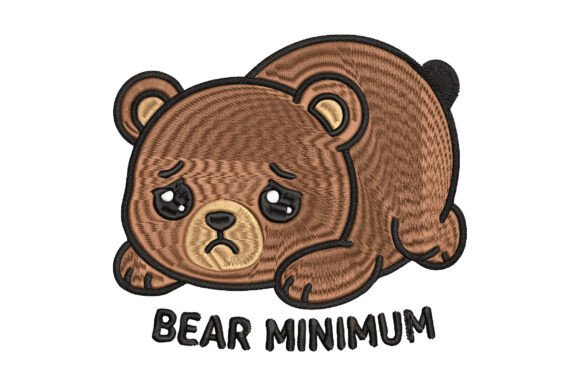
Bear Minimum Embroidery Design: A Maker’s Review
As an embroidery designer who has tested thousands of files across commercial and personal projects, I approach every new machine embroidery design with a critical eye. It is not enough for a graphic to look cute on a screen; it must translate into clean stitches, hold up to washing, and ultimately sell the finished product. When I first loaded the Bear Minimum Embroidery Design into my software, I was looking for more than just a funny pun. I was evaluating whether this sleepy bear motif could actually carry the weight of a professional embroidery project without causing registration issues or fabric puckering.
The concept is immediately appealing. The "Bear Minimum" quote taps into a popular cultural sentiment about self-care and doing just enough, paired with an adorable sleepy bear that fits perfectly within the Teddy Bears category. However, charm does not equal stitchability. My review focuses on how this design performs when the needle hits the fabric, specifically for makers running a craft business or creating high-quality personalized gifts.
First Impressions and Visual Hierarchy
Upon opening the digital embroidery file, the layout feels balanced. The typography interacts well with the illustration rather than competing against it. For an Etsy seller or boutique owner, this balance is crucial because it allows the design to be readable from a distance while retaining detail up close. The sleepy bear acts as a visual anchor, grounding the text so the design doesn't feel top-heavy or disjointed.
I particularly appreciate that the design seems to account for stitch density variations. In many novelty designs, the text is overly dense satin stitching that can distort lightweight fabrics. Here, the lettering appears optimized for clarity without excessive bulk. This suggests the digitizer understood that this file would likely be used on everything from heavy sweatshirts to lighter cotton tees. The mood is undeniably cozy, making it an instant candidate for loungewear, nursery decor, and comfort-focused merchandise.
Real-World Application: The Sweatshirt Test
To truly evaluate this design, I mentally walked through a recent client request for a custom relaxed-fit crewneck. The goal was a unisex garment that felt vintage and soft, not stiff and plasticky. The Bear Minimum Embroidery Design is ideal for this specific sweatshirt embroidery application because the humor aligns with the relaxed fit of the garment itself.
When stitching this onto fleece-backed cotton, the primary concern is always stabilization. Fleece is stretchy and prone to shifting. Because this design combines text with character elements, I would recommend using a medium-weight cutaway stabilizer rather than tear-away. Tear-away often leaves residue behind complex shapes or causes the edges of fill stitch areas to lift after washing. For a handmade product intended for retail, durability is non-negotiable. The customer needs to trust that the "Bear Minimum" joke won't turn into a thread mess after three laundry cycles.
For placement, center chest works beautifully, but I also see strong potential for left-chest positioning on pocket tees. If you are creating an applique design variation, ensure your base fabric contrasts sufficiently with the bear’s outline. Running a test stitch-out on scrap fleece is mandatory here to confirm that the thread colors pop against the garment color, especially if you are using heather grey or oatmeal tones which can sometimes swallow low-contrast threads.
Navigating Fabric Limitations and Hoop Sizes
While versatile, this design requires strategic thinking regarding fabric texture and surface area. As a reviewer, I must caution against using this on highly textured terry cloth or plush minky without significant modification. The fine details of the sleepy bear’s face and the smaller text elements can get lost in the pile of the fabric. If you are making baby items or blankets, consider adding a topping stabilizer or choosing a version of the design with bolder outlines to maintain definition.
Hoop size compatibility is another practical checkpoint. Before purchasing or stitching, verify the dimensions against your machine’s capabilities. If you are working with a 4x4 hoop, check if the text remains legible at that scale. Shrinking a design too much can cause satin stitch columns to become too narrow, leading to thread breaks or poor coverage. Conversely, enlarging it beyond its intended limits can result in sparse fill areas. Always consult the digitizer’s notes on resizing limits to preserve the integrity of the embroidered patch or direct-to-garment stitch out.
For curved surfaces like caps, proceed with caution. Unless the design has been specifically digitized for cap framing (with a bottom-up stitch sequence and specific distortion compensation), placing a centered bear and text combo on a structured hat may result in misalignment. Flat items like tote bags, pillow covers, and tea towels are generally safer bets for maintaining the design's original geometry.
Commercial Viability for Small Business Owners
For those selling on Etsy or at craft fairs, the Bear Minimum Embroidery Design offers excellent merchandising potential. It bridges the gap between niche internet humor and traditional cute aesthetics, widening your target demographic. However, professionalism lies in the execution. A printable mockup is useful for listings, but nothing builds buyer confidence like clear photos of the actual stitched texture showing proper tension and clean jumps.
When listing this as part of your inventory, be transparent about the production method. If you are using this for commercial embroidery, double-check the licensing terms included with your purchase. Some designers allow physical sales but prohibit selling the digital file or using it for print-on-demand services. Respecting these terms protects your shop from IP disputes and supports the original digitizer.
Consider bundling this design into collections. It pairs naturally with other self-care themes, coffee motifs, or introvert-friendly slogans. Creating cohesive product lines increases average order value and establishes brand consistency. Whether you are making a holiday gift set or a year-round staple for your small shop product lineup, this design’s versatility makes it a reliable asset.
Essential Designer Notes for Success
Before you commit this design to a final finished product, run through this practical checklist derived from years of troubleshooting:
- Test Stitch First: Never skip the test run on similar fabric. Check for registration marks aligning correctly between the bear and the text.
- Contrast Check: View your thread selection in black and white before stitching. If the values are too similar, the design will vanish on camera or in dim lighting.
- Stabilizer Matching: Match your backing to the fabric weight, not the design density. Stretchy knits need cutaways; wovens can often use tear-aways.
- Detail Inspection: Zoom in on the smallest text elements in your software. If they are under 4mm tall, they may require a font swap or simplification for reliable stitching.
- Wash Testing: If selling apparel, wash your sample twice. Inspect for loose threads, shrinkage gaps, or stabilizer show-through.
- Licensing Verification: Confirm you have the right to sell finished goods featuring this specific artwork.
The Bear Minimum Embroidery Design succeeds because it understands its audience. It is not trying to be overly complex; it aims to be relatable, technically sound, and visually soft. For the experienced maker, it provides a solid foundation for creative expression. For the business owner, it offers a marketable aesthetic that translates well across multiple substrates. By approaching this file with technical mindfulness and respecting the interplay between digitizing and fabric physics, you can transform a simple digital asset into a beloved, tangible piece of art that customers will cherish. Whether it ends up on a nursery wall or a favorite weekend sweatshirt, the success of the project lies in your attention to the details that happen before the machine ever starts humming.